
The ART journey is a trying one, and repeated failures can be difficult for patients and couples. While some cases can be explained by science, thanks in particular to new tools such as the MatriceLab uterine receptivity test, others can seem magical.
Following a call for testimonials that we relayed on social networks, Margaux’s story might seem unique and incredible. Here is the message she sent to our team a few weeks ago:
After 3 years of trying for unexplained infertility, 6 unsuccessful inseminations, 2 IVF with 2 transfer failures and then 2 pregnancies terminated early following 2 other transfers, I did the MatriceLab test because it was the only test we hadn’t done.
This finally brought us a diagnosis after 3 years of totally unexplained failures: I had a mixed immune profile. It was recommended that we test the proposed treatment after a new biopsy, but we didn’t have time to test it because I became pregnant naturally during the cycle following the biopsy.
I took the pregnancy test on the day I thought I would have to take the injections again for another IVF, I couldn’t believe it. Now 2 months pregnant, I’m keeping my fingers crossed that everything will go smoothly until the end, but I’m convinced that having the biopsy pushed my under-immunized cells to wake up and gave us that long-awaited little “plus” in a natural way! Thank you for putting a diagnosis on real problems.
Margaux
But in medicine, there are very few miracles that are truly incomprehensible, so to help us understand, we asked Dr Nathalie Lédée, PhD in reproductive immunology and co-founder of the laboratory, to explain.
Quite simply, what could have happened in this patient’s case?
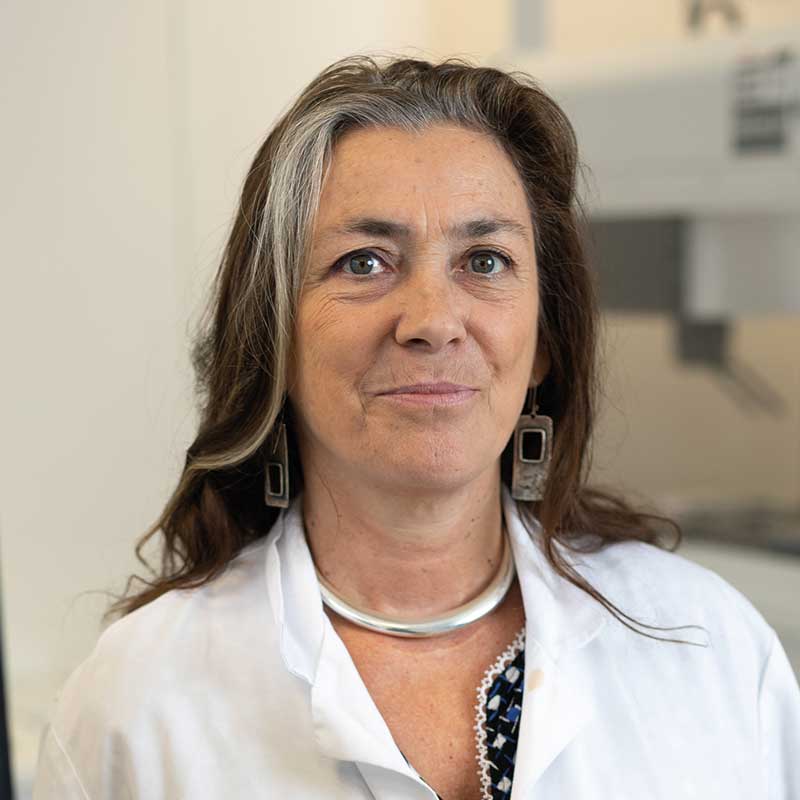
Performing a uterine local injury (in this case, a biopsy) very precisely during the implantation window resulted in better maturation of immune cells for the following cycle. This potentiated the expression of adhesion-promoting molecules in the uterus. This is exactly the effect we aim for when we recommend scratching after detecting immune dysregulation in a patient.
Does it happen a lot?
Yes, according to our data, 8% of patients with uNK cell immaturity (cases of under-activation and certain mixed profiles) will have a spontaneous pregnancy!
We have also observed spontaneous pregnancies during the cycle following therapeutic testing in certain cases of over-activation. So yes, it can happen!
On a more general note, do many patients who have undergone and failed at IVF become pregnant naturally?
Around 5% of women become pregnant naturally during a course of an ART process, which is not insignificant. Until we had this information on uterine receptivity, the mechanism was not well understood. The immunological test has enabled us to understand and identify these cases more precisely.
The ART process can be full of surprises, as Margaux’s story shows. As you can see, the difference between failed implantation and pregnancy is not necessarily due to complicated medical treatments or procedures.
The study of endometrial receptivity and biomarkers identified by the MatriceLab team enables us to understand these phenomena, to explain them when they seem extraordinary, but above all to optimize the success rates of the next embryo implantation in the IVF pathway for patients who have failed to implant or who have suffered repeated miscarriages.